Assessment before advice.
I map what is actually happening in your business before I recommend a single change. Your biggest problem is often not the one you came in describing.


Human-Centered AI Governance for Healthcare & Regulated Businesses
Your team is using AI to draft notes, summarize records, and answer questions, with tools nobody formally approved. Some of that is genuinely helping. Some of it is exposure you would struggle to explain.
I help you tell the difference, then build governance your team will actually follow.

Al Goodwin built his career inside classified, air-gapped environments where every decision had to be documented, defended, and still standing a decade later.
He brings that same discipline to businesses with eighty employees instead of eighty thousand, without the enterprise overhead that usually comes attached to it.

The pattern is the same anywhere the tools arrived faster than the rules. Healthcare is simply where it has been measured.
of medical groups report that AI now plays some role in patient visits. MGMA Stat poll, August 2026
of medical group leaders say they have no AI governance and no formal policy. Another 22% are still working on one. MGMA Stat poll, January 2026, 328 responses
The biggest HIPAA Security Rule overhaul in two decades has not been finalized. When it lands, most provisions carry roughly a 240-day compliance window
If you handle patient records, client files, financial data, or anything covered by a framework you did not write, you are in the same position. The tools are already inside the business. The governance is not.
HIPAA is the sharpest version of this. It is not the only one. NIST, CMMC and every framework built like them ask the same question: can you show what your AI did, and why.
Adoption arrived first. Governance has not caught up. The rule that will require it is still coming, which makes right now the cheapest time you will ever have to get organized.
Take a medical practice, because it is the clearest version of the story. The medical assistant got promoted into office manager, scheduler, and billing coordinator. Nobody trained her for three jobs, so she found a tool that helps her keep up. The front desk did the same thing. So did whoever handles follow-up.
Change the job titles and it is the same story in a law firm, an accounting practice, a clinic, or a contractor carrying a compliance obligation. None of them asked permission. None of them were told not to. That is how AI actually arrives in a small business. Not through a purchase order, but through people trying to keep up.




You do not know which tools are in use, what client or patient information has passed through them, what assumptions are shaping the output, or how you would answer if a customer, an insurer, or an auditor asked.
Banning it does not close that gap. It moves the same activity somewhere you definitely cannot see. Ignoring it does not close it either.
What works is making it visible first.
Before you can govern AI, you have to know where it is. Before you can get real value out of it, same thing. Visibility is not the paperwork step before the real work. It is the real work, and everything useful follows from it.

“Your employees aren’t reckless for experimenting with AI. They’re curious. The governance question isn’t how do we stop this. It’s where is it creating value, what data went where, and can we defend it.”Al Goodwin
What makes this different
Most AI advice arrives attached to something for sale. A platform, a license, an implementation contract, a referral fee. That does not automatically make the advice wrong. It does mean you are never quite sure which part is the recommendation and which part is the sale.
I take no tool commissions and I have no product to place. When I tell you a use case is not worth pursuing, that costs me nothing and saves you the money.

You do not need another vendor telling you what to buy. You need someone willing to tell you what you actually need.
I map what is actually happening in your business before I recommend a single change. Your biggest problem is often not the one you came in describing.
I hold a full-time security architecture role at a company that governs systems at national-security scale. What I bring you is current, not remembered.
You get the governance thinking a large organization pays a whole department for, translated into rules your front desk can follow on a Tuesday morning.
This is a relationship model, not a volume one. I want to know your business properly, and I learn as much from you as you get from me. It also means the calendar is genuinely limited.
Where AI creates value and where it creates risk. Most assessments only go looking for one of those.
The offers
Every one of them opens the same way: finding out what is actually happening.
A fast, focused read on where AI is showing up and what it is doing for you and to you.
Perfect for: an owner who wants clarity before committing to anything bigger.
From $3,500. 30 days, remote.

A close look at where AI touches regulated information, and what has to be true before it spreads further.
Perfect for: an organization up to roughly 80 employees where staff are already using AI without a written policy.
From $4,500. 30 to 60 days, remote.

The full picture. Opportunities mapped, governance gaps closed, and a plan your team can actually execute.
Two meetings is what this costs you in time. Session one is discovery: how the business runs, where AI is showing up, what leadership is worried about. Session two is findings: the value and risk map, the governance gaps, and what to do first. Everything between happens on my side, so your operating schedule stays intact.
Perfect for: an organization ready to move on AI adoption with something more than enthusiasm behind it.
$7,500 to $9,500. 60 days, two meetings, remote.

Governance built as an operating capability rather than a one-time project.
Perfect for: an organization making ongoing AI investment decisions that need the architecture to support them.
$15,000 to $20,000. 90 days, remote with periodic on-site.

Whatever level you start at, the goal is the same: know where AI creates value, understand where it creates exposure, and have a practical way forward.
I assess, advise, guide, and train. I help you decide where AI belongs, how workflows should adapt, and how your people should use it. I do not resell software, take tool commissions, or earn implementation revenue. That is what keeps the advice clean.
When something does need building, you are not handed a report and left to it. I stay involved and bring in trusted partners to execute, so the roadmap turns into something real.

“Having had the pleasure of leading and working with Al Goodwin for many years, I have always found him honest, forthright, and an innovative problem solver. Though to him there are few problems, just opportunities to solve new puzzles. Every new technology is evaluated with a rubric of efficiency, efficacy, cost, level of difficulty, sustainability and compliance. For every effort he is onboard for the duration, supporting the customer and the team. Every team needs an Al Goodwin.”Doug Meyer, Director of Program Infrastructure Technologies, RTX (Retired)
You do not just get advice. You get someone willing to stay with the problem until the answer holds up.
The Curiosity Framework
Some organizations try to stop AI use through restrictions that get quietly ignored. Others rush to adopt without asking whether it fits. Both start from the same mistake. Curiosity is not the problem. It is the raw material.
Known use and unknown use, where it creates genuine value, and where it is quietly getting in the way. Not a risk scan. A value-and-risk map, and you cannot skip it.
Decided together, vendor-neutral, tied to what actually drives your business rather than to a compliance checklist.
Training built around your real workflows, not a policy memo that gets skimmed once. People use AI confidently when they understand both the value and the guardrails.

Review what is actually being used, improve the workflows that are working, and keep governance current.
“Governance is not the thing that slows AI down. Done right, it is what lets responsible teams move faster.”Al Goodwin
Mission
AI governance written for a Fortune 500 legal department and handed to a forty-person business is not governance. It is paperwork nobody reads. Real governance is practical, visible, and usable by the people doing the work.
The question every owner should be asking before adopting AI is not whether it is safe. It is whether it creates real value, and whether you can govern it well enough to use it with confidence. Those are different questions and they need different answers.
The person running your front office does not need to be replaced by AI. She needs AI running the office so she can go back to the job she was actually hired to do. Right now the strongest retention plan a small business has is teaching its people to use these tools well.

“Employee retention is employee training. Teach them AI.”Al Goodwin
Pull the right levers.
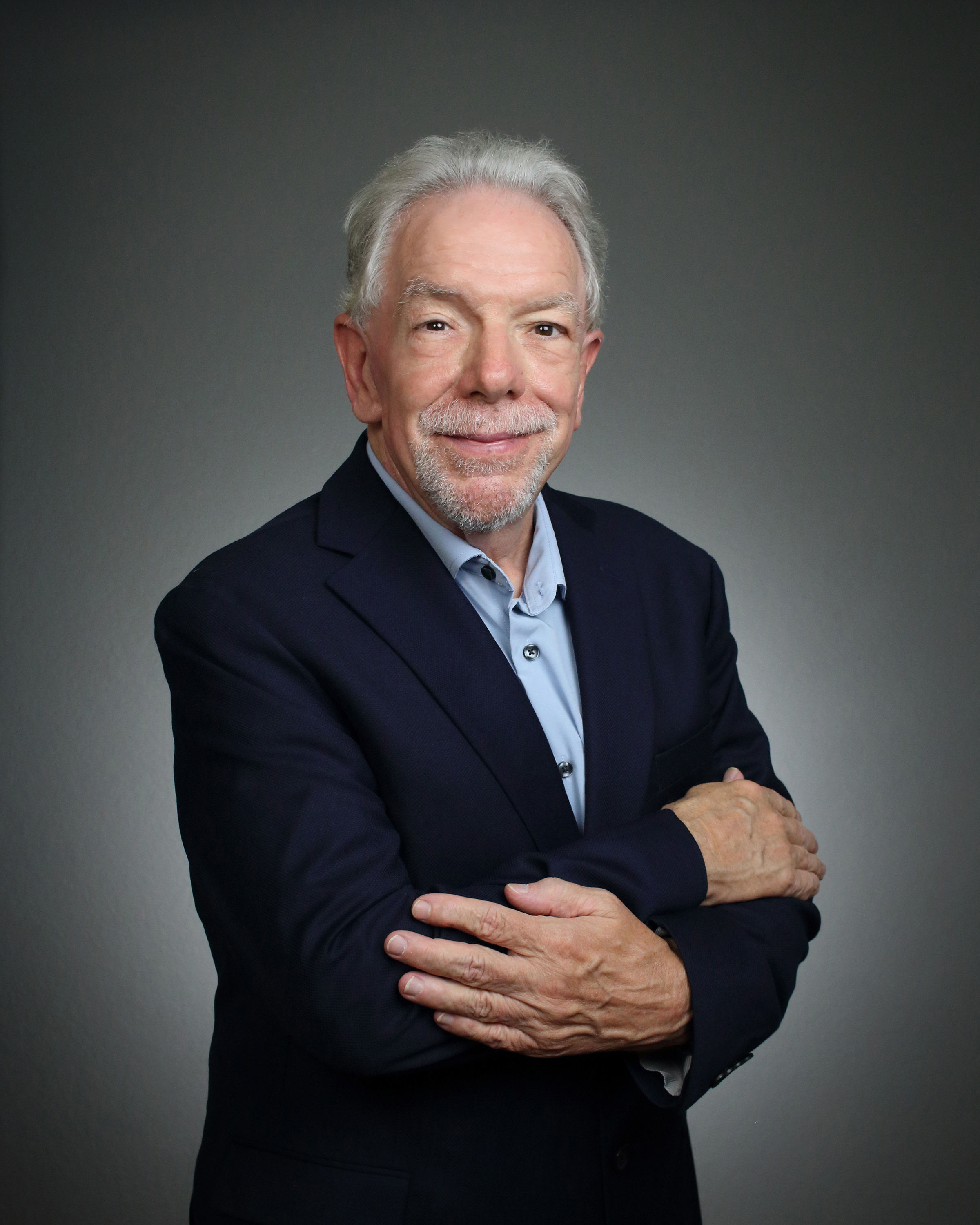
Founder story
For most of my career I was the person nobody formally appointed but everybody needed. Compliance could not talk to architecture. Architecture could not talk to the system administrators. I sat in the middle and translated, and I was good at it.
Then I got promoted. They took my office. I became the architect, several levels above the room where the actual work happens. I stopped touching systems. I stopped teaching people. I missed it more than I expected to.
Around the same time I started noticing something familiar. AI was arriving in organizations the same way compliance mandates used to arrive. Fast, urgent, and completely untranslated. Employees experimenting. Leaders unaware. Vendors selling. Nobody mapping the exposure or asking what needed to be true before any of it scaled.
Here is the part people outside defense do not always see. The processes that sector runs on, for managing risk, governing change, and proving a decision was sound years after it was made, are among the best in the world. Not because the people are smarter. Because the cost of getting it wrong forced the discipline into existence, and then kept it honest.
Those processes scale down. They work just as well in a business of forty as they do on a program of forty thousand. They have simply never been affordable to the businesses that need them most, which is how a five-doctor clinic ends up with no written policy while a defense contractor has a department for it.
That is the gap I started LeverAI to close. Same discipline, translated, priced for a business that could never buy it any other way.
I am not doing this because I have to. I am doing it because it is the part I always liked best.
Fifteen minutes. No pitch, no software, no obligation.
The full engagement runs 60 days and asks two meetings of you. I take four to five clients a year, so if we are not a fit, I will tell you on the call.
Not ready to talk? Get the 2026 AI readiness checklist